
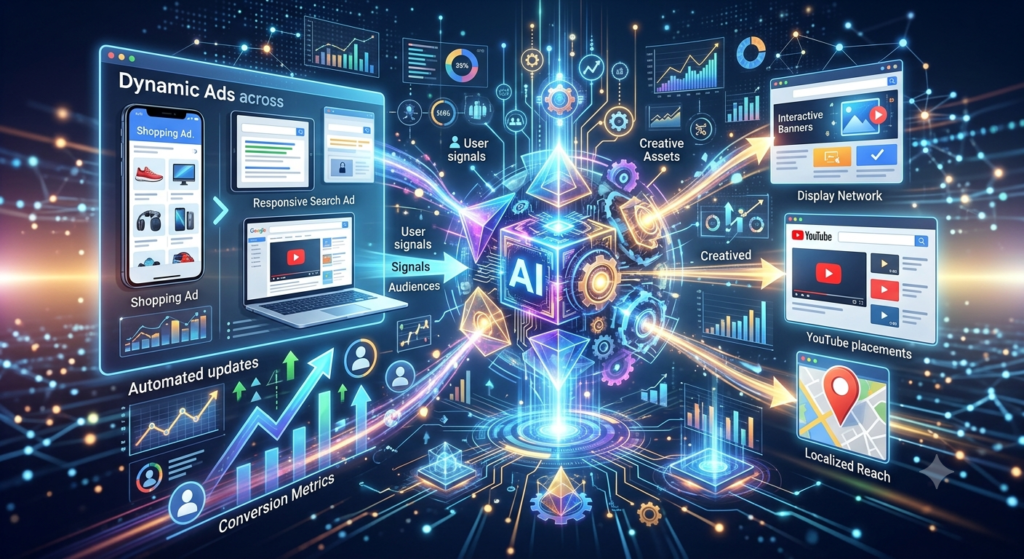
Digital advertising is becoming increasingly driven by artificial intelligence, and Google Ads is one of the biggest examples of this change. In September 2026, Google introduced several new AI Max features for Search campaigns, including improved reporting and new ways for advertisers to guide and understand AI-powered campaigns. Google has also been transitioning some older Search advertising features toward AI Max.For business owners who depend on Google Ads to attract customers, these changes are worth paying attention to.
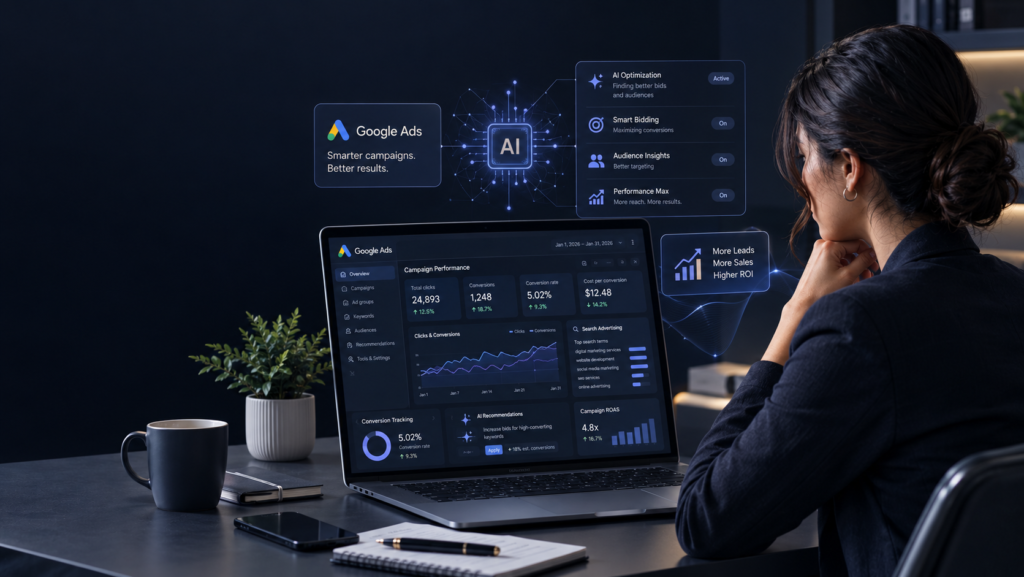
What is Google AI Max?
AI Max is a set of AI-powered features for Google Search campaigns. It is designed to help advertisers find additional relevant searches and improve how their ads and creative assets are used.Rather than relying entirely on advertisers to manually manage every part of a Search campaign, AI Max uses Google’s AI systems to help identify opportunities and optimize campaigns.Google says AI Max provides advertisers with controls for areas such as brand, location, and text guidelines, allowing businesses to give the AI more direction.
What’s new in the latest update?
1. Better AI Max reporting
One of Google’s newest updates is a reporting feature designed to provide a more unified view of the Search advertising journey.According to Google, the new reporting experience will help advertisers see:
– Which search terms triggered their ads
– Which creative assets customers saw
– Where customers landed on the website
– How different parts of the advertising journey connected
This can give businesses more visibility into how AI-driven campaigns are working. Google says more details and availability will be provided later in 2026.
2. AI Brief is expanding
Google is also expanding the closed beta of AI Brief to additional languages.AI Brief allows advertisers to give AI Max more information about their business, audience, and key messaging using their own words.The September update adds Dutch, French, German, Italian, Japanese, Portuguese, and Spanish to the closed beta.
The broader idea is important for businesses: instead of simply letting AI make decisions without context, advertisers can provide more information about what their business represents and who they want to reach.
What about Dynamic Search Ads?
Another important change concerns Google’s older Dynamic Search Ads (DSA).Google originally announced that Dynamic Search Ads would begin automatically upgrading to AI Max in September 2026. However, Google later extended the DSA sunset and automatic upgrade timeline to February 2027.Google says campaigns using Automatically Created Assets and the campaign-level broad match setting will still be automatically upgraded starting in September 2026.This means businesses running older Google Ads campaigns should check their accounts rather than assuming their existing setup will remain unchanged.
Why should business owners care?
For a small or growing business, changes inside an advertising platform can have a direct effect on how campaigns are managed.The biggest change is the increasing role of AI in campaign management.This doesn’t mean that business owners should simply turn on AI features and forget about their advertising.Instead, businesses should pay closer attention to:
Campaign goals:
Make sure Google understands what you actually want to achieve, such as leads, sales, bookings, or website visits.
Business information: Provide accurate website content, messaging, products, services, locations, and other useful signals.
Budget and performance: Monitor spending and conversions rather than focusing only on clicks.
Search terms and creative performance: Use the available reporting to understand how people are finding and interacting with your ads.
Conversions: Make sure important customer actions are being measured correctly.
Google is also introducing additional AI-powered testing and planning tools for AI Max, including tools for testing budgets and ROI targets and a Performance Planner that can help estimate the potential effect of campaign changes.
Does this mean businesses no longer need marketers?
No.
AI can automate and assist with many advertising tasks, but businesses still need clear goals, accurate information, good offers, strong websites, appropriate budgets, and human oversight.The role of digital marketing is gradually changing from manually controlling every small setting toward guiding AI, evaluating its results, and making strategic decisions. For business owners, understanding these changes may become just as important as learning the individual features themselves.
What should your business do now?
If your business uses Google Ads, consider these steps:
1. Check your current Search campaigns.
2. Look for campaigns or settings affected by AI Max changes.
3. Review your conversion tracking.
4. Check your website and ad messaging for accuracy.
5. Monitor search terms, assets, leads, sales, and overall return on advertising spend.
6. Test changes instead of making major budget decisions without measuring the results.
7. Keep checking Google’s official announcements as new AI Max features become available.
You don’t need to adopt every new AI feature immediately. The important thing is to understand what is changing and determine whether a particular feature fits your business goals. The bigger picture: AI is becoming part of digital advertising. Google’s recent updates are part of a much larger change happening across digital marketing.
Google is adding AI-powered tools across Ads and Analytics, while other major technology companies are also introducing AI features for businesses and advertising.
For business owners, this means digital marketing is becoming increasingly automated and AI-assisted.
The businesses that benefit from these changes won’t necessarily be the ones that use the most AI. They will be the ones that understand where AI can help, where human judgment is still needed, and how to measure whether the technology is actually producing business results.
Final thoughts
Google Ads is moving toward a more AI-driven advertising experience, and AI Max is an important part of that transition.
For business owners, the best approach is not to follow every new feature blindly. Instead, stay informed, understand what has changed, test relevant tools, and measure the results against your actual business goals.
Digital marketing is changing quickly—and staying updated is now part of staying competitive.
Sources
– Google Ads & Commerce — AI Max updates and reporting
– Google Ads & Commerce — Dynamic Search Ads transition to AI Max
– Google Ads & Commerce — AI Max testing and planning tools